News
Strong efforts by Vietnamese businesses to shift pepper export strategies
Global pepper prices in early October 2025 recorded divergent trends among major producing countries. While prices in Brazil and Malaysia fell slightly, Indonesia’s market saw a marked increase. In Vietnam, pepper prices remained stable, reflecting businesses’ cautious stance amid volatile global supply and demand.
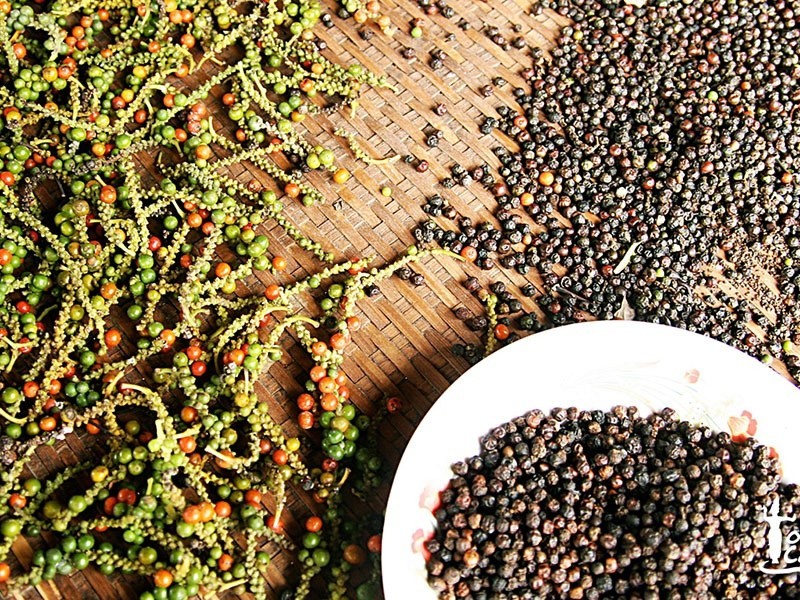
Global pepper price movements in early October 2025
- Brazil: On 9 October 2025, black pepper traded at USD 6,200/ton, down USD 300/ton from the end of September 2025.
- Malaysia: Black pepper at Kuching port fell USD 100/ton to USD 9,500/ton, while white pepper plunged USD 500/ton to USD 12,500/ton.
- Indonesia: In contrast, Lampung black pepper and Muntok white pepper rose by USD 269/ton and USD 222/ton respectively, reaching USD 7,253/ton and USD 10,119/ton.
- Vietnam: At Ho Chi Minh City port, prices remained stable with black pepper 500g/l at USD 6,600/ton, black pepper 550g/l at USD 6,800/ton, and white pepper at USD 9,250/ton.
Weak demand from India due to adverse weather
Prolonged floods in northern India — a major pepper-consuming region — have reduced demand ahead of the festival season. In Kochi, prices fell amid weak buying and rising inventories.
According to the Indian Ministry of Commerce & Industry, in the first seven months of 2025 India imported 25,139 tons of pepper, up 2.4% year-on-year. Vietnam led with 8,504 tons (up 6.5%), followed by Sri Lanka, Brazil, and Indonesia
Brazil expands exports, Vietnam becomes largest market
Per Comexstat, in August 2025 Brazil exported 4,722 tons of pepper worth USD 26.5 million, an increase of over 28% in volume and 38.7% in value compared with the previous month.
Top three destination markets:
- Vietnam: 1,243 tons (up 411.5%)
- UAE: 540 tons (down 35.5%)
- Germany: 525 tons (up 75%)
Vietnam’s pepper sector: lower volume but higher value
In the first nine months of 2025, Vietnam’s pepper exports reached nearly USD 1.27 billion, up 27.8% year-on-year and almost matching the full-year 2024 value, despite production falling to 186,500 tons, down 7.1%.
The “lower volume, higher value” picture reflects Vietnamese businesses’ strong transformation. Instead of relying on raw pepper exports, companies are scaling up deep processing, standardizing quality, and increasing product value to meet strict standards in markets such as the EU, US, and Japan.
New strategy — toward sustainability and added value
Experts say product diversification (ground pepper, pepper oil, pepper extracts) combined with traceability systems and ESG standards will be essential for Vietnam’s pepper sector to maintain its leading export position.
This strategy reduces reliance on commodity-price swings and opens higher-end markets with better profit margins.
Image source: Internet.